
Newest
Popular
Products
Can’t find what you are looking for, please call 1800 812 321 or email us on info@billi.com.au
Billi Media
How to Choose a Multi-Function Dispenser That’s Worth the Investment
Office kitchens influence productivity, wellbeing, sustainability, and the overall impression of your workplace. When kettles create ques, bottled water contracts feel excessive, or ageing chillers become unreliable, the conversation shifts from convenience to infrastructure.
A well-specified underbench filtered water system can consolidate boiling, chilled, sparkling and filtered ambient water into one streamlined solution. But not every system delivers the same operational performance, acoustic suitability or lifecycle value.
With over 30 years designing and manufacturing instant filtered boiling and chilled systems in Melbourne, Billi understands what separates a short-term upgrade from a long-term workplace asset. Learn about the practical criteria that determine whether a multi-function dispenser is worth the investment, from capacity and quiet operation, to sustainability credentials and total cost of ownership.
Modern workplaces demand more than a kettle
Most offices begin with a simple arrangement of a kettle and a refrigerator. Perhaps bottled water is delivered weekly. It works in the short term, until it creates friction.
Kettles introduce wait times during peak periods. Bottled water generates recurring cost and waste. Multiple standalone appliances consume space, energy and maintenance attention. None of them are integrated into the broader design of the workplace.
Hydration has become part of the amenity conversation. Staff often expect instant access to boiling and chilled water. Sustainability targets encourage a reduction in single-use plastics. Fit-out decisions increasingly prioritise efficiency and long-term performance.
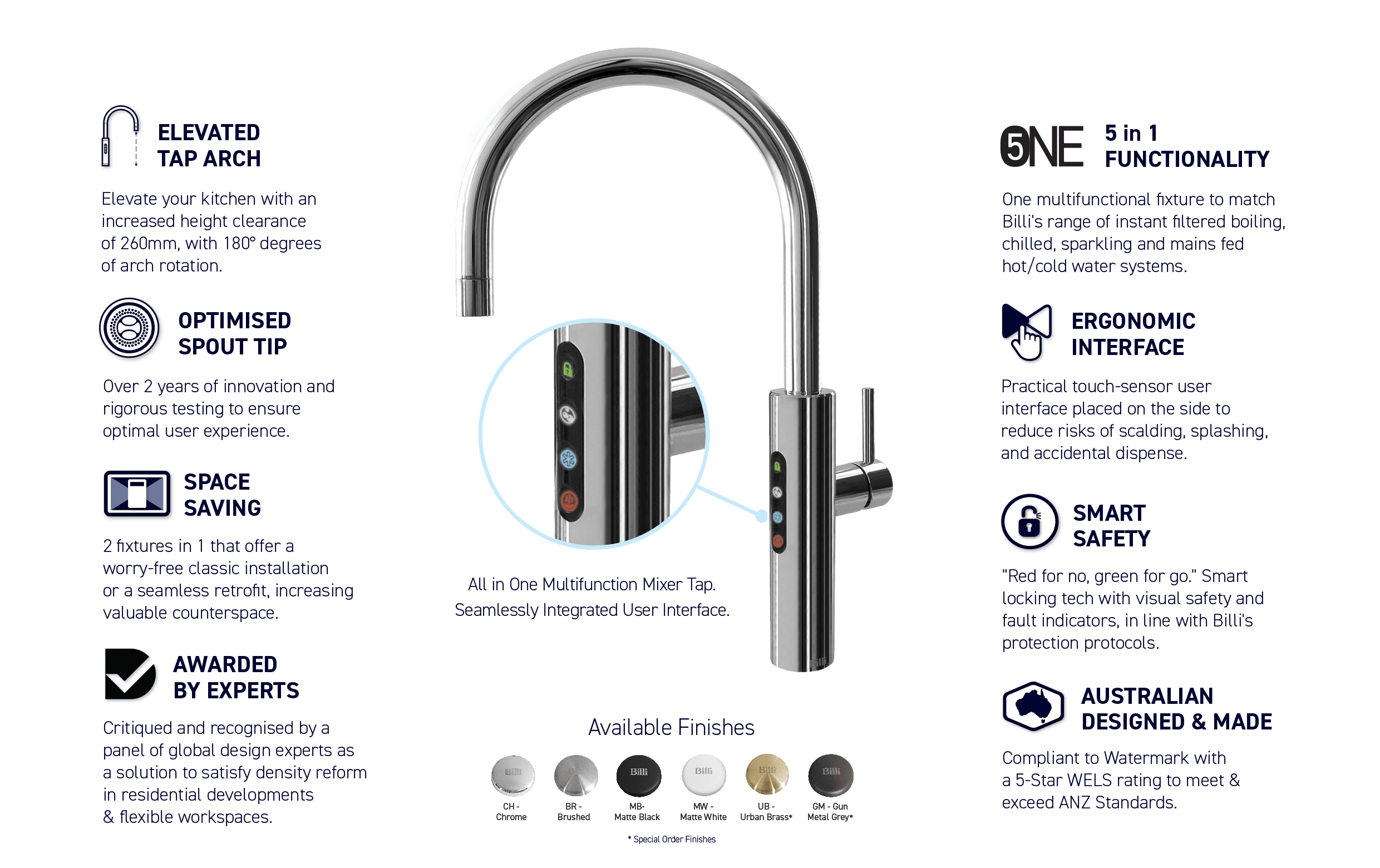
Billi systems were developed around this shift. Designed and manufactured in Australia, they deliver instant filtered boiling, chilled, sparkling and still water from a compact underbench unit. The result is consolidation, with fewer appliances, less clutter, and greater control.
What actually makes a system worth the investment
A multi-function dispenser should not be evaluated as a decorative upgrade. It should be assessed as workplace infrastructure.
Before comparing models, define the criteria that matter to your organisation:
- Integration of boiling, chilled, sparkling and ambient water
- Capacity to handle peak demand
- Acoustic impact in open-plan environments
- Installation requirements and joinery implications
- Energy efficiency features
- Servicing structure and predictability of maintenance costs
Framing the decision this way shifts the focus from initial outlay to lifecycle value.
Integration and underbench efficiency
Integration reduces operational complexity. Instead of separate kettles, chillers and carbonators, an integrated system delivers multiple water types from one underbench unit.
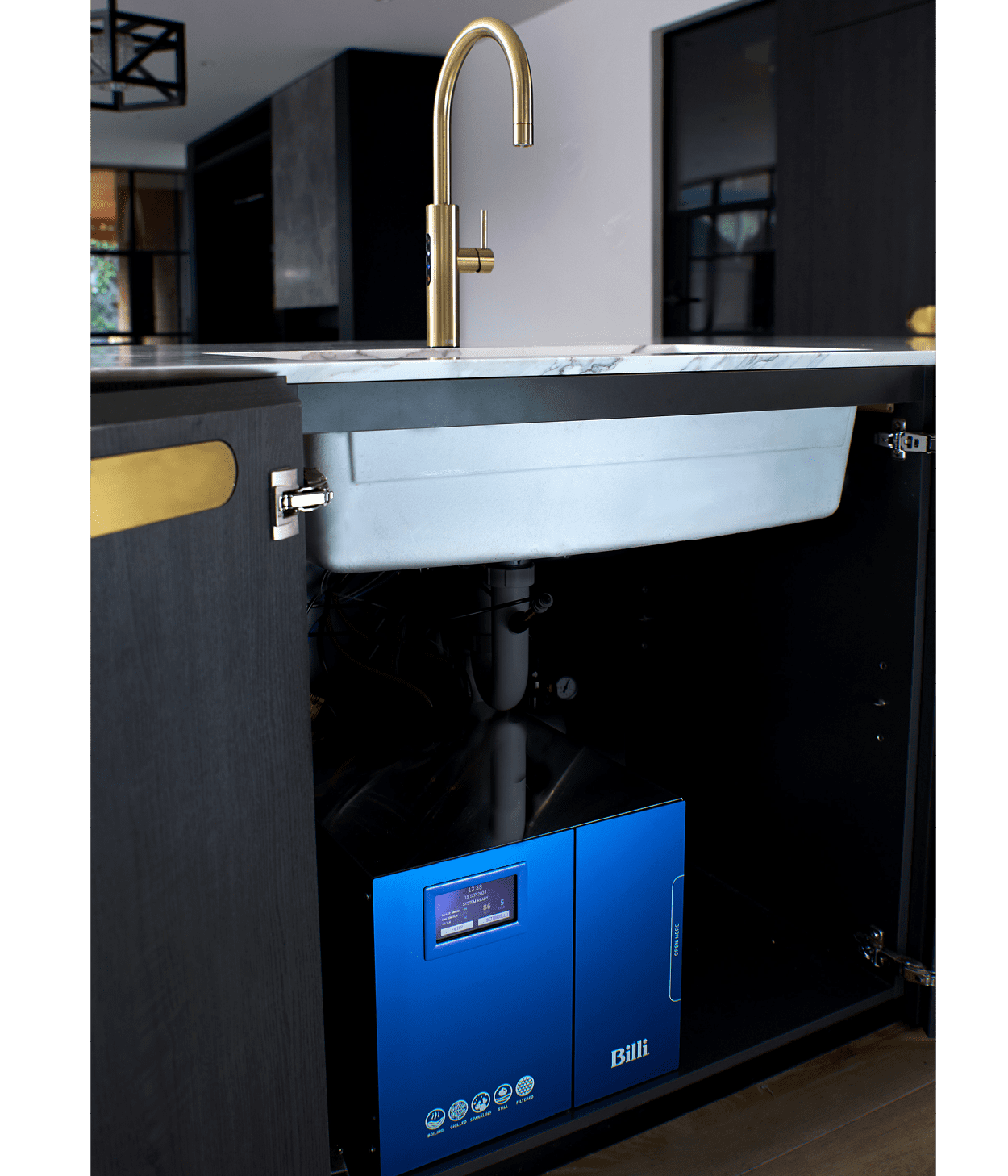
Billi systems are engineered with a space-saving underbench footprint, allowing you to reclaim benchtop area and simplify kitchen layouts. In high-traffic office environments, that space matters.
Safety and usability are built in. Boiling dispensers include a safety switch to lock off access where required. Electronically controlled boiling flow briefly moderates delivery as water enters the cup to minimise splashing. These practical design elements reduce daily friction in shared environments.
If you are comparing configurations, you can explore suitable options within our commercial range to align specification with staff numbers and usage patterns.
Matching performance to workplace demand
Performance should be assessed realistically. A system that performs well in a small office may not suit a high-demand breakout zone.
Sparkling capability, where required, should also be considered carefully. An instant sparkling water dispenser can integrate carbonation within the same underbench unit. Adjustable sparkling levels, with control up to 5 bar of CO? pressure, allow workplaces to tailor output to preference. Ice bank technology supports consistent chilled and sparkling delivery.
For organisations aiming to reduce bottled sparkling purchases, the Silver Sparkling Plan (within BilliCare) offers an environmentally conscious alternative. Cylinders are exchanged and refilled, with capacity of more than twice that of some disposable options.
Not every workplace requires sparkling. But where client experience, staff amenity or sustainability goals are priorities, integrated sparkling can reduce reliance on packaged beverages while maintaining convenience.
To review available configurations, you can compare sparkling water systems such as the Eco Sparkling & Quadra Sparkling (boiling, chilled and sparkling), or Alpine Sparkling (chilled & sparkling), or OmniOne (boiling, sparkling, chilled, and still), to determine whether the function aligns with your operational needs.
Quiet operation and seamless installation
Noise is often overlooked until after installation. In open-plan offices, even modest mechanical sound can become disruptive.
Billi offers both water-cooled and air-cooled systems. Water-cooled models use heat exchange technology and do not require a cooling fan or cupboard ventilation. This reduces ambient noise and removes the need for cabinet cut-outs or grilles in many installations.
Air-cooled systems remain appropriate in certain settings, but where acoustic comfort and clean joinery are priorities, water-cooled solutions offer practical advantages.
Correct specification is essential. Contact our experts to ensure the selected system aligns with your space, usage patterns and installation constraints.
Cost measured over time
The most significant difference between entry-level and investment-grade systems emerges over years, not months. This is where total cost of ownership becomes decisive.
Energy efficiency is central. Our heat exchange technology recovers waste heat from the chilling process to preheat boiling water, improving efficiency and supporting energy savings. Standby mode powers the unit down after two hours of non-use to reduce unnecessary consumption. Eco and Sahara models incorporate Eco-Intelligence technology, a self-learning timer that monitors usage patterns and adjusts operation to minimise energy consumption.
Maintenance must also be predictable. Filters are consumable items and must be replaced regularly, with commercial sites typically changing filters at least every six months depending on usage and water quality. Structured service plans simplify asset management. The BilliCare Gold Plan includes comprehensive maintenance and filter replacements performed by accredited technicians at a fixed fee. The Silver Plan provides scheduled filter replacement at a consistent rate.
With correct specification and regular servicing, there is no reason a Billi unit will not operate for many years. Longevity shifts the financial equation significantly.
Sustainability credentials that support modern fit-outs
Billi Quadra units have been repeatedly certified by Global GreenTag at Gold Level under the LCARate Program and hold an Environmental Product Declaration under EPD EN 15804. We also maintain membership with the International WELL Building Institute and participate in initiatives aligned with WELL standards.
For architects and facilities managers working toward Green Star, WELL or ESG objectives, documented credentials provide assurance. Reducing bottled water reliance, selecting energy-efficient systems and specifying Australian-designed and manufactured products all support more responsible fit-out decisions.
Common concerns and practical answers
Budget is often the first hesitation. A multi-function system represents a capital investment. However, when evaluated over its operating lifespan, including energy performance, servicing structure and reduced appliance duplication, the value proposition becomes clearer.
Some workplaces question whether sparkling is necessary. In smaller environments it may not be. In larger offices or client-facing spaces, it can reduce bottled purchases and elevate amenity without adding complexity.
Maintenance is another concern. BilliCare plans exist to reduce downtime and simplify servicing, with accredited technicians performing scheduled maintenance. Warranty conditions are clearly defined for commercial installations, and consumables such as filters are treated as standard replacement items.
Noise and installation disruption can be managed through correct model selection, particularly where water-cooled systems eliminate the need for ventilation cut-outs.
The most important decision is not whether to upgrade, but how to specify correctly.
Choosing with confidence
When you assess integration, performance, acoustic suitability, sustainability credentials and total cost of ownership together, the decision becomes more strategic. A well-specified system reduces clutter, improves efficiency, supports environmental objectives and provides predictable servicing over the long term.
If you are reviewing your options, explore our commercial range to compare models suited to your environment. For tailored specification advice, contact our experts. And to ensure continued performance from an existing unit, book a service through BilliCare.
When hydration is integrated into your workplace infrastructure, the investment supports efficiency, sustainability and long-term operational confidence.
CATEGORIES
ARCHIVES
- July 2026
- May 2026
- April 2026
- March 2026
- February 2026
- January 2026
- December 2025
- November 2025
- October 2025
- September 2025
- August 2025
- July 2025
- June 2025
- May 2025
- April 2025
- March 2025
- February 2025
- January 2025
- December 2024
- November 2024
- October 2024
- September 2024
- August 2024
- July 2024
- June 2024
- May 2024
- April 2024
- March 2024
- February 2024
- November 2023
- September 2023
- June 2023
- April 2023
- March 2023
- January 2023
- December 2022
- November 2022
- October 2022
- July 2022
- June 2022
- April 2022
- March 2022
- January 2022
- December 2021
- November 2021
- October 2021
- September 2021
- August 2021
- July 2021
- June 2021
- November 2020
- June 2020
- February 2020
- January 2020
- November 2019
- October 2019
- September 2019
- July 2019
- April 2019
- March 2019
- February 2019
- November 2018
- May 2018
- February 2018
- October 2017
- May 2017
- January 2017
- October 2016
- September 2016
- April 2015
- March 2015
- November 2014
- October 2014


